
FAMILY HEALTH HISTORY
- Nov 26, 2025
- 2 min read
Updated: Jan 12
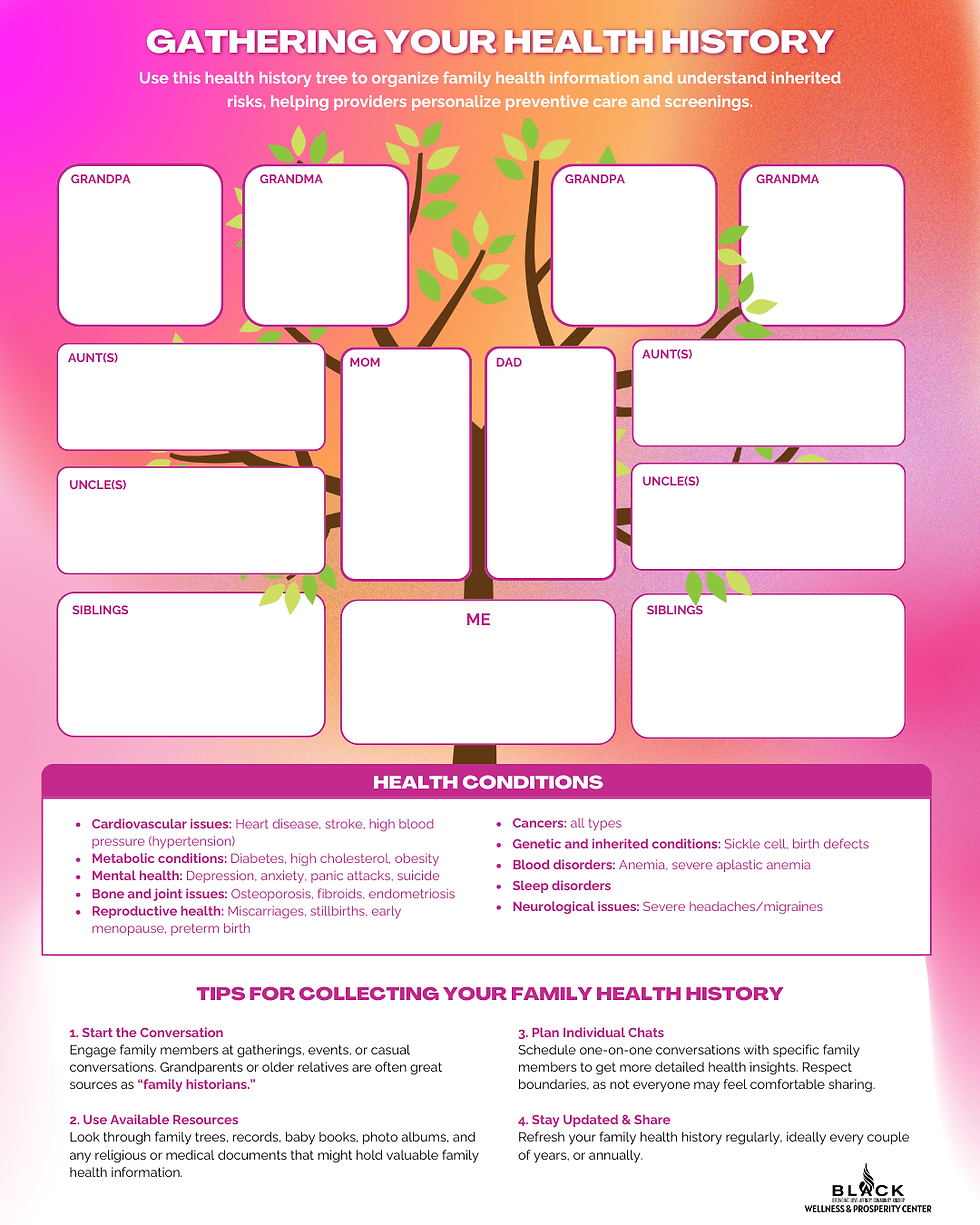
Use this health history tree to organize family health information and understand inherited risks, helping providers personalize preventive care and screenings.
Understanding your family health history is one of the most powerful steps you can take toward protecting your well-being. The conditions that affected your parents, grandparents, siblings, aunts, and uncles can offer valuable clues about the risks you may face—and the preventive steps you can take now.
Whether you're filling out a medical form, planning for the future, or simply curious about your family's story, here’s how to start gathering your family health history with confidence and care.
Using a Family Health History Tree
A simple health history tree can help you organize information from your:
Grandparents (on both sides)
Parents
Siblings
Aunts and Uncles
Yourself
This visual tool helps you spot inherited patterns and share clear information with your healthcare provider.
Why Family Health History Matters
Your family tree holds more than names, birthdays, and relationships. It also holds important patterns about health. Many health conditions can run in families, such as:
Cardiovascular issues: heart disease, stroke, and high blood pressure
Metabolic conditions: diabetes, high cholesterol, obesity
Mental health concerns: depression, anxiety, panic attacks, suicide
Bone and joint conditions: osteoporosis, fibroids, endometriosis
Reproductive health issues: miscarriages, stillbirths, early menopause, preterm birth
Cancers: all types
Genetic or inherited conditions: sickle cell disease, birth defects
Blood disorders: anemia, severe aplastic anemia
Sleep disorders
Neurological issues: severe headaches or migraines
Knowing which of these conditions appear in your family can help you and your healthcare provider personalize preventive care and screenings.
Tips for Collecting Your Family Health History
1. Start the Conversation
Begin by talking with close family members parents, grandparents, siblings, aunts, and uncles. Family gatherings, holidays, or casual chats are great opportunities to ask simple questions. Older relatives are often the “family historians” and may remember details that younger generations do not.
2. Use Available Resources
You may already have access to helpful information. Look for:
Family trees
Baby books
Old medical records
Photo albums
Religious or cultural documents
Notes kept by grandparents
These can reveal health patterns and diagnoses that might not come up in conversation.
3. Plan Individual Chats
Some relatives prefer private discussions. Scheduling one-on-one conversations can make people more comfortable and offer more accurate information. Be respectful—some family members may not want to share certain details, and that’s okay.
4. Stay Updated & Share
Family health history isn’t something you gather once and forget. Update your records every couple of years or annually if possible. As new diagnoses appear within your family, keeping everyone informed can help future generations stay proactive about their health.

